
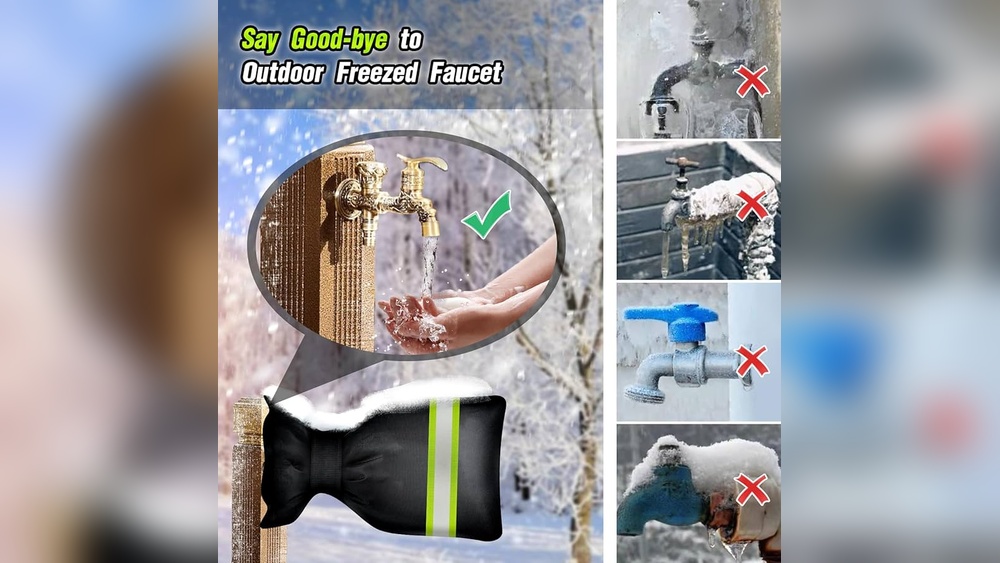
When winter arrives, many homeowners worry about one thing: frozen outdoor faucets. A burst pipe can cause thousands of dollars in water damage, ruin walls, and lead to stressful repairs. To prevent this, people often use special covers for their outdoor faucets, but not all covers are the same. The two most popular choices are the faucet sock and the foam cover.
If you’re not sure which one to buy or use, you’re not alone. The differences between these products are not always clear, and choosing the wrong one can mean trouble when freezing temperatures hit. This guide will walk you through everything you need to know about faucet socks and foam covers, their strengths, weaknesses, and which is better for your needs. You’ll learn what matters most, discover some insights that most beginners miss, and get advice based on real experiences.
What Is A Faucet Sock?
A faucet sock is a fabric pouch, often filled with insulating material, that fits over your outdoor water spigot. Most are secured with a drawstring or Velcro strap to hold them tightly in place. The outside is usually made from waterproof or water-resistant material to protect against rain and snow.
The main purpose of a faucet sock is to provide insulation and keep cold air away from your outdoor faucet. Inside, the sock contains layers of foam, polyester fiber, or other insulating materials. Some models use reflective foil for extra heat retention.
Faucet socks are available in different sizes to fit both standard and larger spigots. They are lightweight, flexible, and easy to install or remove.
What Is A Foam Faucet Cover?
A foam cover (sometimes called a foam dome or cap) is a rigid, molded cover usually made from expanded polystyrene or similar foam. It fits over the faucet, covering the spigot and the wall area around it. Most foam covers have a plastic or metal hook inside, which attaches to the faucet handle and pulls the cover tight to the wall.
The foam acts as an insulating barrier, trapping a pocket of warmer air around the faucet. The hard shell helps protect the faucet from cold wind and snow, and most covers are waterproof.
Foam covers are often seen as a “classic” choice and are sold in most hardware stores. Sizes are usually standard, but there are extra-large options for commercial or unusual spigots.

Credit: diy.stackexchange.com
Why Faucet Protection Matters
Many people underestimate how quickly an outdoor faucet can freeze. Water left in pipes or spigots expands as it turns to ice, and this pressure can burst the pipe—sometimes inside the wall, where leaks are hard to spot at first.
A broken pipe is not just a small repair. The average cost to fix water damage from a burst pipe in the US is over $5,000, and insurance may not cover all cases. Even if you just have to replace an outdoor faucet, you might spend $150–$300 for parts and labor.
Both faucet socks and foam covers are affordable, usually under $10–$20 each. Using one can save you thousands of dollars and prevent the hassle of emergency repairs in winter.
Key Differences Between Faucet Sock And Foam Cover
At first, both products might seem similar—they both cover the faucet to protect it from freezing. But their design, materials, installation, and performance can be quite different. Here’s a side-by-side look to help you understand the details:
| Feature | Faucet Sock | Foam Cover |
|---|---|---|
| Material | Fabric (with insulation inside) | Rigid foam (polystyrene or similar) |
| Water Resistance | Waterproof or water-resistant shell | Usually waterproof |
| Installation | Slide on, secure with strap or drawstring | Hook onto faucet, tighten to wall |
| Reusability | Yes | Yes |
| Cost | $5–$15 (typical) | $3–$10 (typical) |
| Durability | Good, but fabric may fade/tear over time | Good, foam can crack if handled roughly |
| Insulation Value | Medium to high (varies by model) | Medium (depends on thickness) |
| Fit | Flexible, fits odd shapes | Less flexible, best for standard spigots |
Installation: Which Is Easier?
Many people wonder if one cover is easier to put on than the other. Here’s what you should know:
Faucet socks are simple to use. You open the pouch, slip it over the faucet, and pull the drawstring or tighten the Velcro strap. That’s it—no tools, no small parts. Because the sock is flexible, it can fit around hoses or unusual spigot shapes. This is handy if your faucet has a built-in vacuum breaker or other attachments.
Foam covers require you to hook the plastic/metal clip inside the cover onto the faucet handle. You then pull a cord to tighten the cover so it presses against the wall. This creates a better seal, but if your faucet is close to a wall, has a short handle, or is an odd shape, it can be tricky to get a good fit. In cold weather, the hook and cord can be hard to handle if you’re wearing gloves.
Non-obvious tip: If your faucet is not the standard “hose bib” shape or sits at a strange angle, a faucet sock is usually the better choice. Foam covers work best on simple, straight spigots with room to attach the hook inside.
Insulation Power: How Well Do They Work?
The main job of both products is to keep your faucet from freezing. Here’s what matters:
- Material thickness: More layers or thicker foam means better insulation.
- Seal to the wall: Gaps let cold air in, reducing effectiveness.
- Water resistance: Wet insulation loses power quickly.
Faucet socks often have several layers—an outer shell, an insulating core, and sometimes a reflective liner. Premium socks use high-loft fiber or thick foam, which can provide better insulation than thin foam domes. However, if the sock does not fit snugly, wind can blow cold air inside.
Foam covers trap air inside their rigid shell, which is a good insulator. If the cover pulls tightly against the wall, it prevents drafts. The insulation value depends on the foam’s thickness—budget covers may use thinner foam, offering less protection in extreme cold.
Real-world results: In most cases, both products work well down to about 20°F (–6°C) if installed correctly. For temperatures lower than that, or for long cold spells, it’s smart to add extra insulation—such as wrapping the faucet in a towel or using heat tape before covering it.
Durability And Longevity
No one wants to buy new faucet covers every year. Here’s how each type holds up over time:
Faucet socks have an outer shell made from nylon or polyester, which resists water, UV rays, and mildew. Still, after a few seasons, the fabric can fade or tear—especially if birds or animals peck at it. The drawstring or Velcro can wear out after many uses.
Foam covers are tougher against weather but can be brittle. If dropped or stepped on, the foam may crack. UV rays from the sun can cause foam to become chalky and weak over several years. Hooks or cords may rust if not stainless steel.
Practical insight: If you live in a sunny area, foam covers can break down faster. In wet climates, fabric socks may get moldy if not dried before storage. Always check your covers each fall and replace any that are damaged.
Weather Protection: Rain, Snow, And Sun
Outdoor faucet covers face all kinds of weather, not just cold. How do they perform?
- Faucet socks: The outer shell is usually water-resistant, but not fully waterproof unless specifically labeled. Heavy rain can sometimes soak through, making the insulation less effective. Some high-end socks have a rubberized coating for extra protection. They handle snow well, but snow sitting on the sock for weeks can eventually seep in.
- Foam covers: Most are naturally water-resistant, as foam does not absorb water easily. The shape sheds rain and snow, but water can sometimes get inside at the cord hole. A good seal helps prevent this. Foam does not rot, but it can get dirty over time.
Extra tip: If you live where winter storms bring a lot of wind-driven rain or freezing rain, consider using a silicone caulk or weatherstrip around the edge of a foam cover for a tighter seal.
Cost And Value
Price is an important factor for many homeowners. Here’s what you can expect:
- Faucet socks: $5–$15 each, depending on brand, insulation, and size. Premium models with thick insulation or reflective liners cost more.
- Foam covers: $3–$10 each. Larger or commercial models may cost up to $20.
While foam covers are often cheaper, the difference is not huge—especially compared to the cost of a burst pipe. Most people find both options affordable enough to cover all outdoor faucets.
Non-obvious insight: Some buyers try to save money by using old towels, rags, or plastic bags. These homemade solutions often get wet, freeze, and do not provide enough insulation. Store-bought covers are a small investment that provides real protection.
Aesthetics And Appearance
Some homeowners care about how their faucet covers look, especially on the front of the house.
- Faucet socks: Come in a variety of colors (black, green, blue, brown) and shapes. The fabric has a “soft” look and can blend in with siding or brick. Some brands offer decorative patterns.
- Foam covers: Usually white, gray, or tan domes. They look utilitarian and can stick out visually, but are less noticeable if placed behind bushes or in backyards.
For most, function is more important than style. But if you want your covers to match your home’s look, faucet socks give you more options.
Environmental Impact
If you care about sustainability, you may wonder which product is greener.
- Faucet socks: Made from synthetic fabrics and insulation, which are not biodegradable. However, the fabric can sometimes be recycled as textile waste. Some brands use recycled polyester.
- Foam covers: Made from expanded polystyrene, which is difficult to recycle and takes centuries to break down in landfills. A cracked foam cover cannot usually be repaired or recycled easily.
Practical tip: To reduce waste, store your covers indoors during the off-season to extend their lifespan. Choose durable models rather than the cheapest, disposable ones.
Common Mistakes To Avoid
Many first-time buyers make simple mistakes that can lead to frozen faucets even with covers. Here are the most common:
- Leaving hoses attached: Always disconnect garden hoses before covering faucets. Water trapped in the hose can freeze and back up into the faucet.
- Poor installation: If there are gaps, wind and cold air can get inside. Make sure the cover fits tightly.
- Using the wrong size: A cover that is too small will not insulate well. Measure your faucet before buying.
- Ignoring maintenance: Damaged covers lose their insulation. Check for tears, cracks, or missing straps each fall.
- Assuming any cover is enough: In very cold climates (below 10°F/–12°C), extra insulation or heat tape may be needed.
- Not draining the pipe: If you have a shutoff valve inside, turn off the water to the outdoor faucet and drain the line before winter.

Credit: www.gemefindustries.com
Which Is Right For You? Decision Guide
Choosing between a faucet sock and a foam cover depends on your situation. Here’s a quick guide:
- Choose a faucet sock if:
- Your faucet is odd-shaped, has extra attachments, or sits at a strange angle.
- You want a softer look or specific colors.
- You need a quick and simple installation.
- You live in a climate with moderate winters.
- Choose a foam cover if:
- Your spigot is a standard shape and sticks out from the wall.
- You want a rigid cover that resists impacts.
- You need a cover that sheds rain and snow better.
- You live in an area with frequent freeze-thaw cycles.
Expert tip: In extremely cold areas, use both—a foam cover with a faucet sock underneath. This double layer gives extra insulation and peace of mind.
Real-world Example: Performance In Different Climates
To see how these covers work in real life, let’s look at two scenarios:
Mild Winter (southern States, Usa)
- Average winter lows: 25–35°F (–4 to 2°C)
- Short freezing periods, not severe
Either cover works well. Most homeowners use foam covers for simplicity. Faucet socks are popular for decorative reasons. One layer is usually enough.
Harsh Winter (northern States, Canada)
- Winter lows often below 10°F (–12°C)
- Long periods below freezing, strong winds
Faucet socks with thick insulation or a double layer (sock + foam) are recommended. Some people wrap faucets with old towels or foam pipe insulation before covering. The key is a tight seal and extra layers.
How To Install Each Cover The Right Way
A good installation is just as important as the cover you choose. Here’s how to do it:
Installing A Faucet Sock
- Disconnect the garden hose. Make sure the faucet is dry.
- Slide the sock over the faucet, covering all metal parts.
- Tighten the drawstring or Velcro so the sock fits snugly against the wall.
- Check for gaps. Adjust the cover if needed.
- Inspect after storms. Make sure the sock is still secure.
Installing A Foam Cover
- Remove any hoses or attachments from the faucet.
- Place the cover over the spigot. The hook inside should go over the handle or base.
- Pull the cord or handle to draw the cover tight against the wall.
- Make sure the cover touches the wall with no gaps.
- Test that it’s secure by gently tugging on the cover.
Extra tip: If your foam cover does not seal well because of siding or brick texture, use weatherstripping tape to fill small gaps.
Table: Quick Comparison For Common Needs
Here’s a summary to help you choose the best option quickly:
| Need | Best Choice | Why |
|---|---|---|
| Odd-shaped faucet | Faucet sock | Flexible fit for unusual shapes |
| Lowest price | Foam cover | Usually cheaper |
| Maximum insulation | Faucet sock (thick or double layer) | More layers possible |
| Simple, fast install | Faucet sock | Just slip on and tighten |
| Looks/decor | Faucet sock | Variety of colors and patterns |
| Long-term durability | Foam cover | Resists weather better if not handled roughly |
| Extreme cold | Both (layered) | Best protection is double layer |

Credit: steinhand.de
Tips For Winterizing Outdoor Faucets
Even the best cover is not enough if you don’t winterize correctly. Here are steps to maximize protection:
- Turn off the water supply to outdoor faucets if your plumbing allows.
- Drain the line by opening the faucet after shutting off the water inside.
- Remove all hoses, splitters, or attachments.
- Wrap the faucet with foam pipe insulation or a towel for extra protection in very cold areas.
- Install your cover (sock or foam) tightly.
- Check covers after storms and make sure they have not shifted.
- Store covers indoors in spring to extend their life.
Comparing Brands And Models
Many brands sell both faucet socks and foam covers. Some well-known names include Frost King, Duck, Home Depot, and Ace Hardware. Key things to compare:
- Insulation thickness: More layers or thicker foam is better for cold climates.
- Size options: Make sure the cover fits your faucet.
- Attachment method: Drawstring, Velcro, or hook—choose what’s easiest for you.
- Reviews and ratings: Read what other homeowners say, especially about fit and durability.
If you want to see a variety of models, check major hardware stores or large online retailers. For more information on faucet covers and freeze protection, the Wikipedia page on frost protection offers technical details and history.
Frequently Asked Questions
What Happens If I Forget To Cover My Outdoor Faucet?
If an outdoor faucet is left uncovered during freezing weather, the water inside can freeze and expand. This may cause the pipe to burst, leading to leaks, water damage, and costly repairs. Even one cold night can be enough to cause damage, especially if temperatures drop below 28°F (–2°C).
Can I Use Both A Faucet Sock And A Foam Cover Together?
Yes, using both together provides extra insulation and is a smart choice in very cold climates. Place the sock over the faucet first, then add the foam cover on top. This double layer traps more heat and blocks wind better.
How Long Do Faucet Covers Last?
With proper care, a good faucet sock or foam cover should last 3–5 years. Sun exposure, rough handling, and animals can shorten their lifespan. Storing covers indoors during spring and summer helps them last longer.
Are Faucet Socks And Foam Covers Reusable?
Yes, both types are reusable. Always inspect them for damage each fall before reinstalling. Replace covers if they have large tears, cracks, or missing parts.
Do Faucet Covers Work In Extremely Cold Weather (below 0°f Or –18°c)?
Covers provide some protection, but in extreme cold, extra steps are needed. Add extra insulation under the cover or use electric heat tape. Always turn off and drain outdoor faucets if possible for the best protection.
Protecting your outdoor faucets is a small step that can save you from big problems in winter. Whether you choose a faucet sock or a foam cover, the key is a snug fit, good installation, and regular checks. With the right cover and a little care, you can enjoy a worry-free winter, no matter how cold it gets.