
Choosing the right kitchen faucet can change the way you cook, clean, and live in your kitchen. Many people today are trying to decide between a bar faucet and a pull down faucet. While both types offer water on demand, their designs, functions, and best uses are very different. Picking the wrong faucet can lead to frustration and even extra costs. This article will help you understand the differences, advantages, and disadvantages of each type. Whether you are building a new kitchen or updating an old one, you will find all the important details here to make the smartest choice for your needs.
Understanding Bar Faucets
A bar faucet is also known as a prep faucet. It is usually smaller and less tall than regular kitchen faucets. Bar faucets are most often installed in smaller sinks, such as in a home bar, prep area, or a second sink on a large kitchen island.
Bar faucets have a simple design. Most have a single handle and a fixed spout, though some offer a small swivel for more range. They are not made for washing big pots or pans, but they work well for quick hand washing, filling a glass, or rinsing fruits and vegetables.
Where Bar Faucets Shine
- Small spaces: Bar faucets fit perfectly in compact areas where a large faucet would be too big.
- Entertaining: If you host guests, a bar faucet in a home bar or entertainment area keeps the main kitchen sink open for bigger tasks.
- Prep work: Having a second faucet near a prep sink can make meal preparation easier and faster.
Common Features
- Short height and reach
- Simple controls
- Usually no spray function
- Designed for light-duty tasks
Many people do not realize that bar faucets can also be used in laundry rooms or RV kitchens. Their small size and easy installation make them very flexible.
Exploring Pull Down Faucets
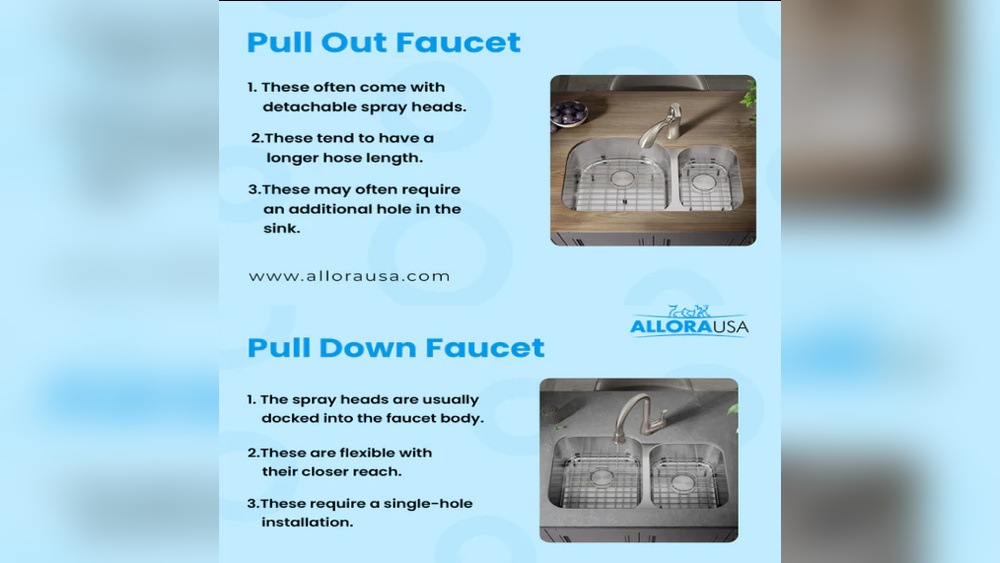
A pull down faucet is designed for the main kitchen sink. It has a high-arched spout and a spray head that pulls down toward the sink. This makes it easy to rinse dishes, fill pots, and clean the sink.
Pull down faucets are popular because they combine modern style with practical features. The spray head usually has multiple functions, such as a steady stream or a wide spray. Some models even offer pause buttons or water-saving modes.
Why Choose A Pull Down Faucet?
- Versatility: The pull-down spray head makes it easy to reach all parts of the sink.
- Deep sinks: These faucets pair well with deep sinks, letting you fill and wash large pots or baking sheets.
- Easy cleaning: The spray function helps remove stuck-on food and makes cleaning faster.
Main Features
- High arc spout (gooseneck design)
- Pull-down spray head with hose
- Multiple spray settings
- Single or dual handle
A key detail beginners miss: not all pull down faucets are the same. Some have magnetic docking, which keeps the spray head in place, while others rely only on weight or clips. This affects how easy and smooth the faucet feels during daily use.

Credit: allorausa.com
Side-by-side Comparison: Bar Faucet Vs Pull Down Faucet
Understanding the main differences can help you choose the right faucet for your kitchen. Here is a clear comparison:
| Feature | Bar Faucet | Pull Down Faucet |
|---|---|---|
| Height | Short (5-12 inches) | Tall (15-24 inches) |
| Spout Reach | Short (4-8 inches) | Long (8-12 inches) |
| Spray Function | Rare | Common |
| Best For | Prep, bar, small sinks | Main kitchen sink, big tasks |
| Typical Price Range | $40–$150 | $80–$400+ |
Non-obvious Differences
Most buyers focus on size and spray function, but there are other differences:
- Water pressure: Bar faucets often have lower flow rates. Pull down faucets usually have adjustable pressure and spray types.
- Installation: Bar faucets often need a smaller sink hole (single or dual hole). Pull down faucets usually need a standard kitchen sink setup.
- Maintenance: Pull down faucets have more moving parts and may need more care.
When To Choose A Bar Faucet
A bar faucet is best when you need a second water source in your kitchen or another room. Here are some examples:
- You have a large kitchen island with a prep sink.
- You enjoy entertaining and want a drink station away from the main cooking area.
- Your kitchen is small and a large faucet would overwhelm the space.
- You want a faucet in the laundry room or in an RV.
A mistake many people make is using a bar faucet as the main kitchen faucet. These faucets are not designed to handle large pots or heavy washing. Over time, you might find them too small and limiting for daily use.
Practical Tips For Buying
- Check the sink size. Bar faucets fit best with small sinks.
- Choose a finish that matches your kitchen hardware.
- Look for a model with a swivel spout if you need more reach.
When To Choose A Pull Down Faucet
A pull down faucet is ideal for the main kitchen sink, especially if you cook often or have a big family. Here’s when a pull down faucet makes sense:
- You regularly wash large dishes, pots, or baking trays.
- You want to reach all corners of a deep sink.
- You need multiple spray settings for different cleaning tasks.
An insight many beginners miss: pull down faucets need enough space above the sink. If you have low cabinets or shelves, measure carefully to make sure the faucet fits.
Practical Tips For Buying
- Look for magnetic docking for a secure spray head.
- Check the hose length; longer hoses give more flexibility.
- Choose a model with easy-clean nozzles to prevent mineral build-up.
Detailed Pros And Cons
To help you decide, here’s a more detailed look at the advantages and disadvantages of each faucet type.
Bar Faucet Pros
- Compact size saves space
- Easy to install in small sinks
- Simple design means fewer parts to break
- Good for light-duty tasks
Bar Faucet Cons
- Not suitable for washing large items
- Usually lacks spray function
- Limited reach
Pull Down Faucet Pros
- Spray head reaches all sink areas
- Multiple spray settings for different needs
- Stylish design adds a modern look
- Handles large pots and deep sinks easily
Pull Down Faucet Cons
- More expensive
- Needs more space above the sink
- More moving parts can mean higher chance of leaks
Style And Design Choices
Both bar and pull down faucets come in a variety of styles and finishes. You can find them in chrome, stainless steel, matte black, brass, and more. Most brands offer matching accessories like soap dispensers or air gaps.
A common mistake: picking a faucet based on looks alone. Always check the technical details, such as height, reach, and water flow, before buying. Some stylish models may not fit your sink or space.
Installation And Maintenance
Installing A Bar Faucet
Bar faucets are generally easy to install because of their simple design. They often need only one or two mounting holes. Most DIY homeowners can install a bar faucet with basic tools.
- Turn off the water supply first
- Remove the old faucet if necessary
- Place the new faucet and secure with mounting hardware
- Connect the water lines
- Turn on the water and check for leaks
Installing A Pull Down Faucet
Pull down faucets are more complex. They need enough space for the hose and spray head to pull down smoothly. Some sinks may need extra holes for a soap dispenser or side spray.
- Check your sink’s mounting holes
- Follow the manufacturer’s instructions for weight and hose placement
- Make sure the spray head docks securely
Maintenance Tips
Both types of faucets can last for years with proper care:
- Wipe down with a soft cloth to avoid water spots
- Clean aerators and spray heads to remove mineral build-up
- Check for leaks around handles and hoses
A useful tip: If your water is hard, choose a faucet with rubber spray nozzles. These are easier to clean and less likely to clog.

Credit: houseofrohl.com
Cost Comparison
Price is a big factor for many buyers. Here’s a simple price range:
| Faucet Type | Low End | High End | Average Lifespan |
|---|---|---|---|
| Bar Faucet | $40 | $150 | 8–12 years |
| Pull Down Faucet | $80 | $400+ | 8–15 years |
Pull down faucets are usually more expensive, but they also offer more features. Bar faucets are affordable and good for simple needs.
Common Mistakes To Avoid
- Choosing the wrong size: Always measure your sink and space before buying. A faucet that’s too big or too small will not work well.
- Ignoring water pressure: Some faucets need higher pressure. If your home has low pressure, check the faucet’s requirements.
- Forgetting about reach: A short spout may not cover all areas of the sink, leading to splashes or hard-to-reach spots.
- Not checking installation needs: Some sinks need extra holes or special hardware.
- Picking style over function: A beautiful faucet is useless if it does not fit your needs.
Many first-time buyers overlook the importance of the handle design. Some handles hit the backsplash or wall if space is tight. Always check the handle swing before installing.
Eco-friendly Options
Today, many faucets offer water-saving features. Look for faucets with:
- Aerators that reduce water flow but keep strong pressure
- Spray modes that use less water
- Certifications like WaterSense
Pull down faucets often have these features built in, but bar faucets can also include aerators for lower water use.
Real-life Examples
Let’s look at how different users might choose:
- Busy family: Needs a pull down faucet for washing big pots and fast cleaning.
- Wine lover: Installs a bar faucet in the home bar to rinse glasses and mix drinks.
- Small apartment: Uses a bar faucet for a compact kitchen where space is tight.
- Home chef: Installs both—a pull down faucet for main cleaning and a bar faucet for prepping vegetables.
A less obvious tip: If your kitchen plumbing allows, having both faucet types gives you maximum flexibility.
Latest Trends And Technology
Modern faucets come with smart features, like touch or motion sensors. Some pull down faucets can be turned on with a wave of your hand, which is great when your hands are dirty. Bar faucets are starting to add simple touch controls too.
Voice-activated faucets are also becoming popular, letting you control water with commands. These features are most common in pull down models.
Some faucets now track water usage and help you save on utility bills. If you want the latest tech, focus on high-end pull down faucets.
Durability And Materials
Both faucet types are made from durable materials like solid brass or stainless steel. Chrome finishes are easy to clean, while matte finishes hide fingerprints and water spots.
Not all finishes are equal. Cheaper faucets may have finishes that chip or fade. Look for PVD (Physical Vapor Deposition) finishes if you want extra durability.
Pull down faucets, with their moving spray head, need strong hoses. Stainless steel or braided nylon hoses last longer than plastic.
Cleaning And Hygiene
Pull down faucets are easier to clean inside the sink, thanks to the spray head. Bar faucets are easier to clean on the outside, since they have fewer parts.
Some high-end faucets have antimicrobial coatings, reducing bacteria growth. This is more common in pull down models, but some bar faucets offer it too.
Which Is Best For You?
To decide between a bar faucet and a pull down faucet, ask yourself:
- How big is your sink?
- How much space is above and around your sink?
- What is your main use (cooking, entertaining, laundry)?
- Do you need spray functions?
- What is your budget?
If you need a faucet for heavy daily use, a pull down faucet is the best choice. If you want a secondary water source or have a small space, a bar faucet is a better fit.
Comparison Table: Quick Reference
Here’s a summary of the main points to help you choose:
| Feature | Bar Faucet | Pull Down Faucet |
|---|---|---|
| Best For | Small sinks, prep, bar | Main kitchen, heavy use |
| Spray Function | No | Yes |
| Space Needed | Low | High |
| Price | Low–Medium | Medium–High |
| Ease of Cleaning | Outside only | Inside sink & outside |
Frequently Asked Questions
What Is The Main Difference Between A Bar Faucet And A Pull Down Faucet?
The main difference is size and function. Bar faucets are smaller, for light tasks and small sinks. Pull down faucets are larger, with a spray head for cleaning big items.
Can I Use A Bar Faucet As My Main Kitchen Faucet?
It is possible but not recommended. Bar faucets are not made for heavy use or washing large pots. You may find them too small and not powerful enough for a main kitchen sink.
Are Pull Down Faucets Harder To Install Than Bar Faucets?
Usually, yes. Pull down faucets need more space and have more parts, like a hose and spray head. Bar faucets are simpler and often easier for DIY installation.
Which Faucet Type Saves More Water?
Both can be water-efficient if they have aerators or water-saving features. Pull down faucets often have more advanced options, like spray modes and certifications.
Where Can I Find More Information On Kitchen Faucets?
For more in-depth technical information, you can visit the Wikipedia page on faucets.
Choosing the right faucet is a personal decision based on your kitchen size, cooking habits, and design style. By understanding the pros, cons, and unique features of bar faucets and pull down faucets, you can make a choice that fits your life. Take the time to measure your space and think about your daily needs. The right faucet will make your kitchen more enjoyable and efficient for years to come.

Credit: riverbendhome.com